All Posts By

robert

Michaela Senft (SUI) places 2nd in the 350km

Text and photography Callum Jolliffe

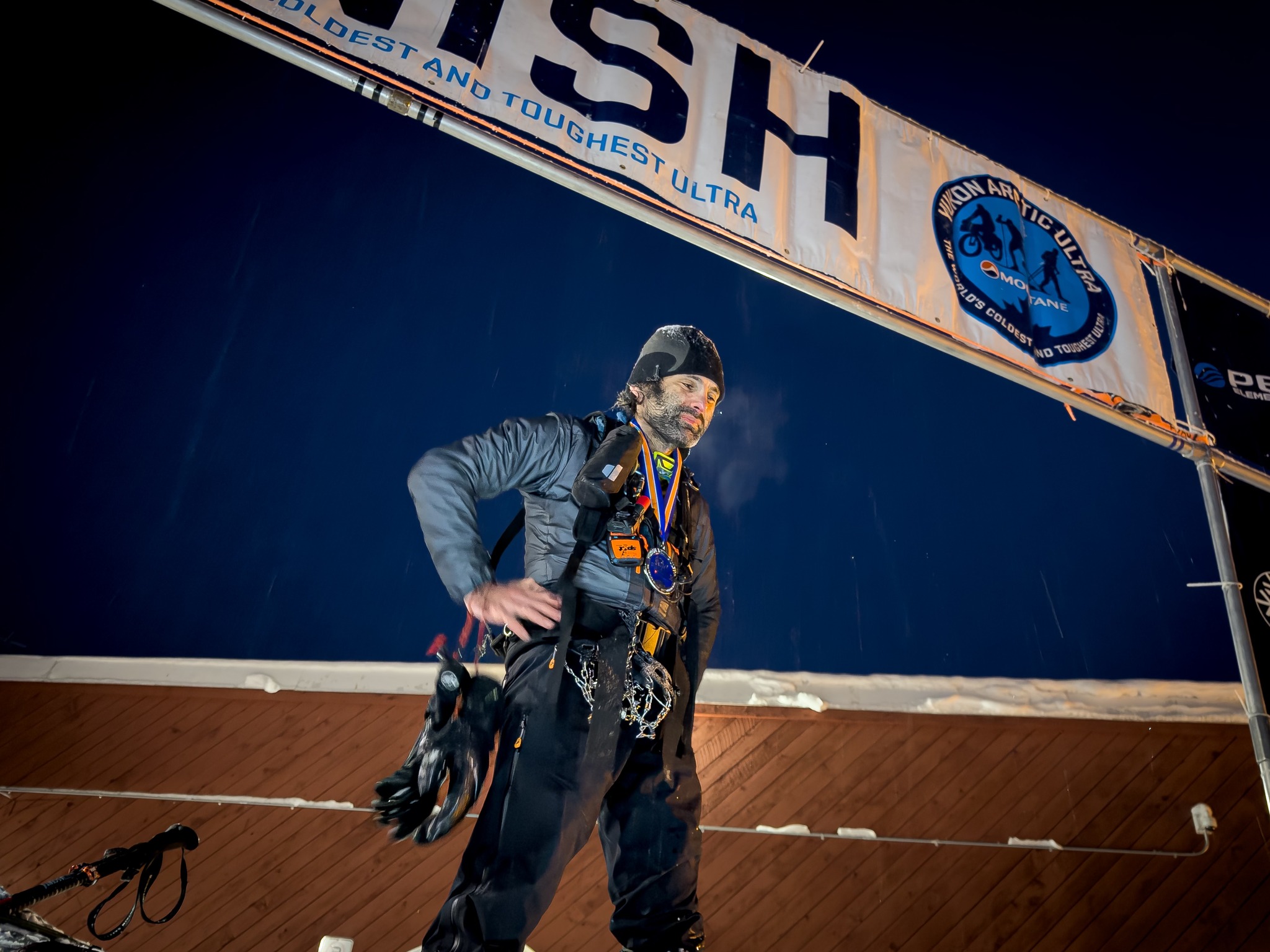
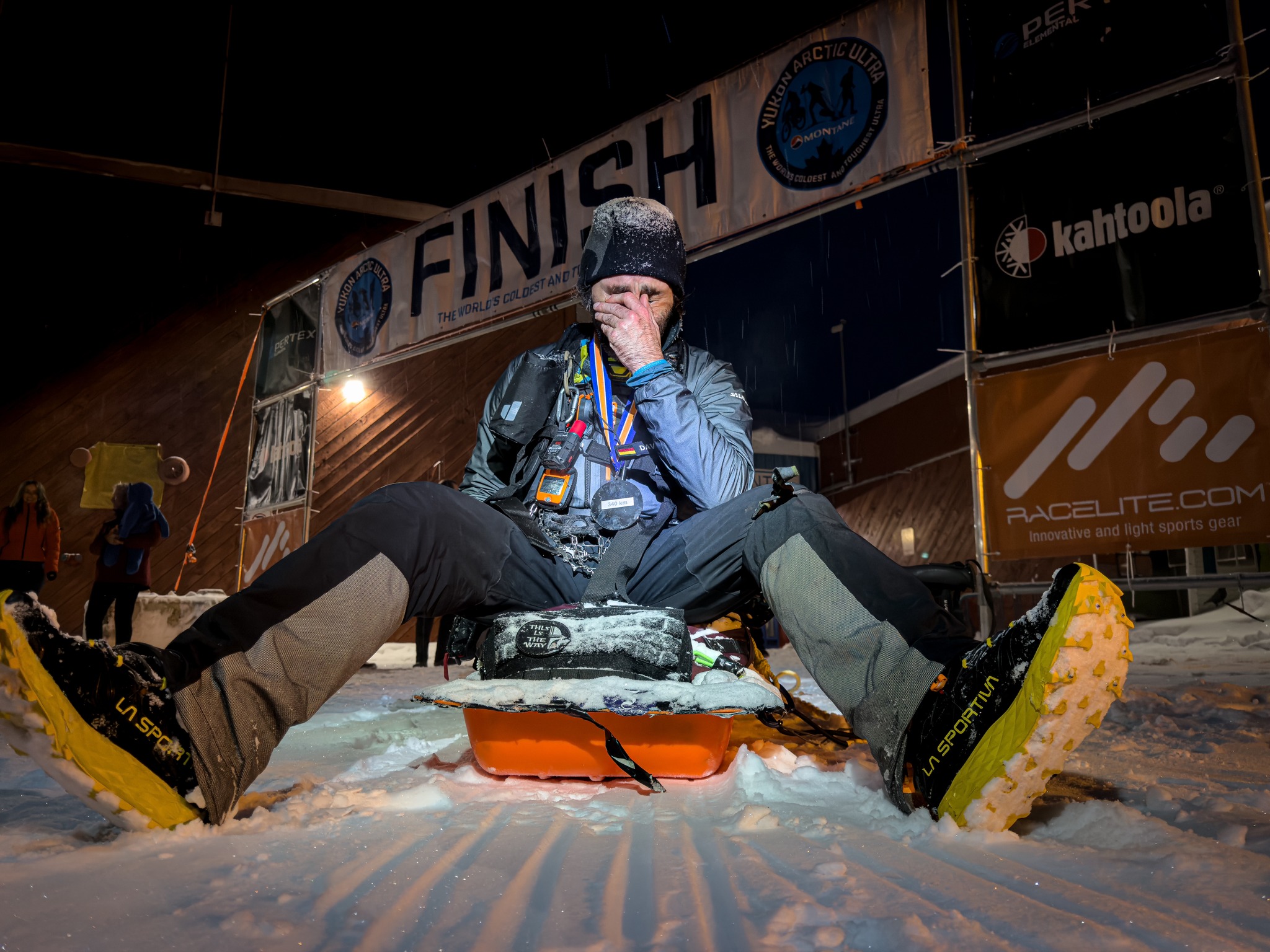
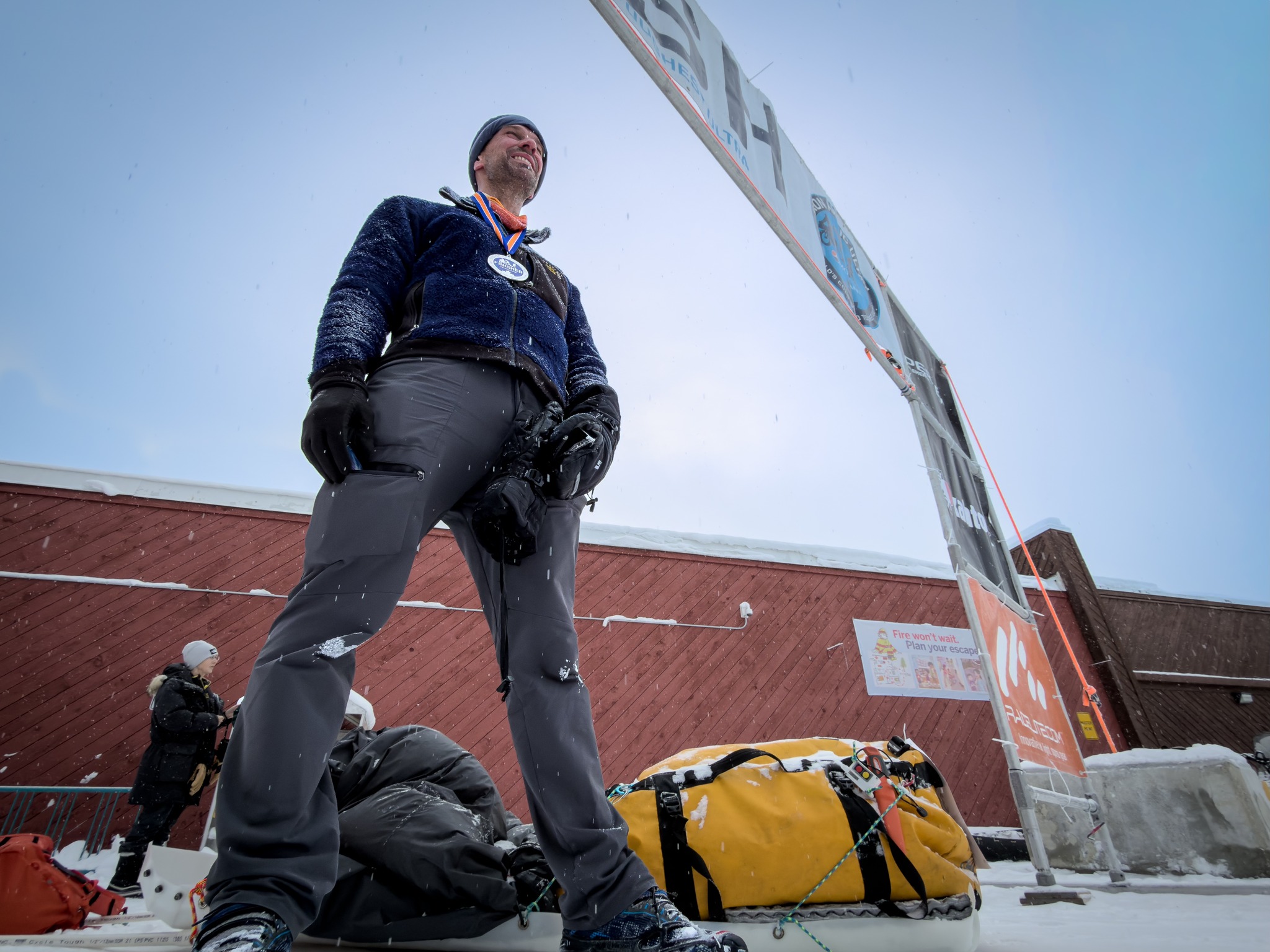
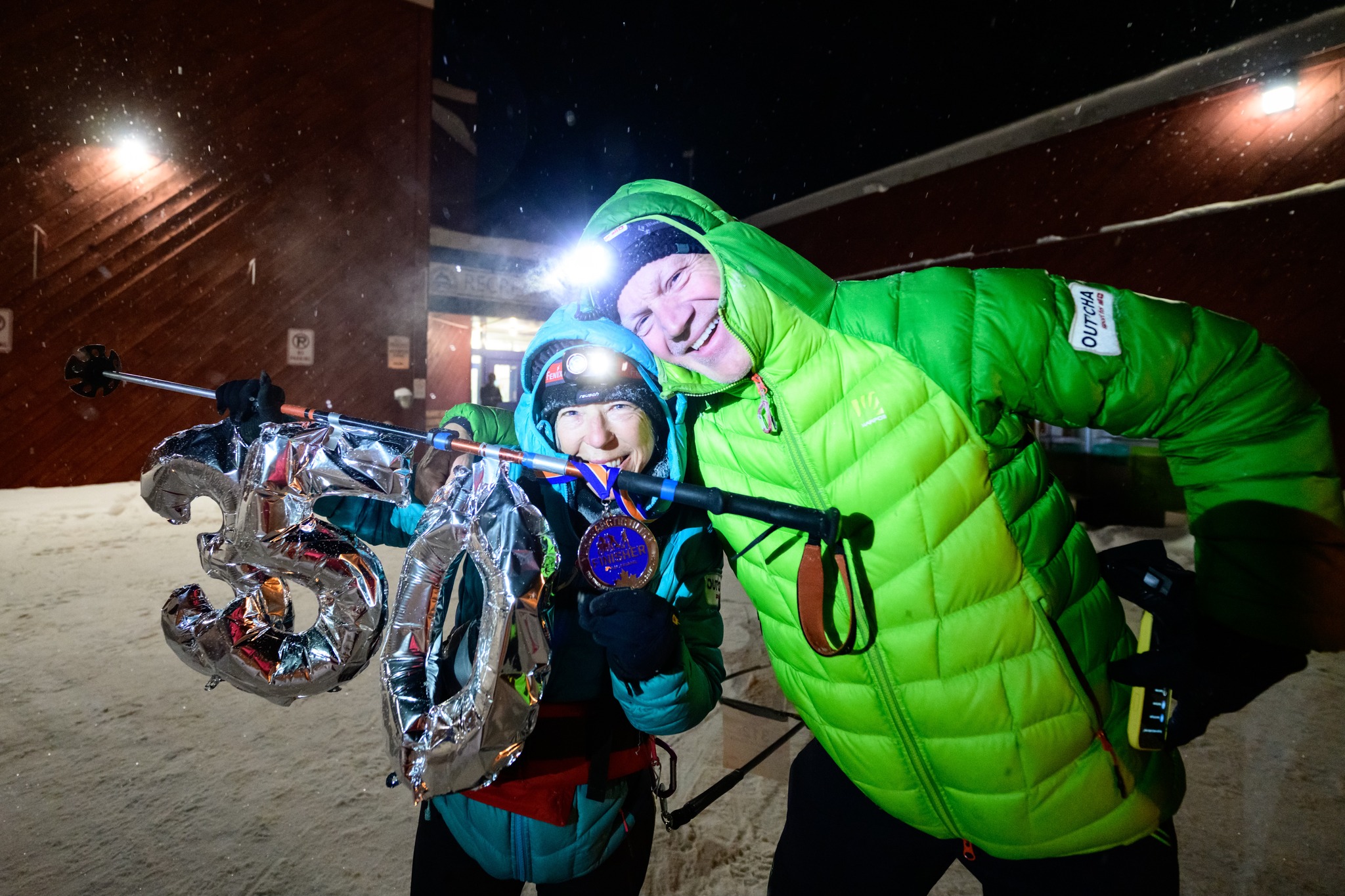
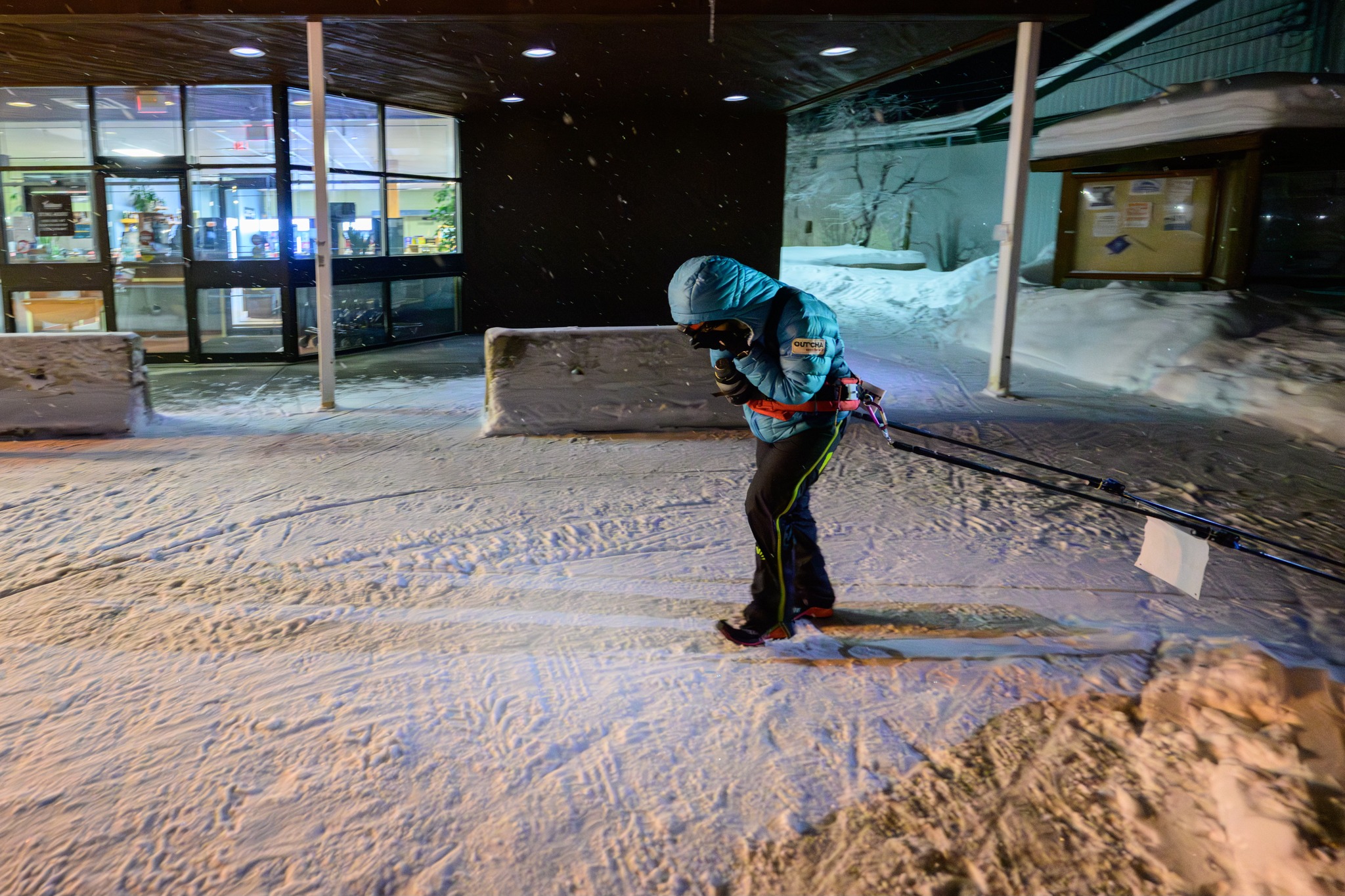
At 07:13 this morning, Michaela Senft arrived into Faro to finish second overall in the 350km race – and first (and only) female finisher. A superb performance, delivered with patience, resolve, and quiet strength.

Michaela is no stranger to Arctic racing. In 2022 she won the 185km Lapland Arctic Ultra, and once again she has shown exactly what disciplined systems, experience, and self-belief can achieve over long distances in unforgiving conditions.
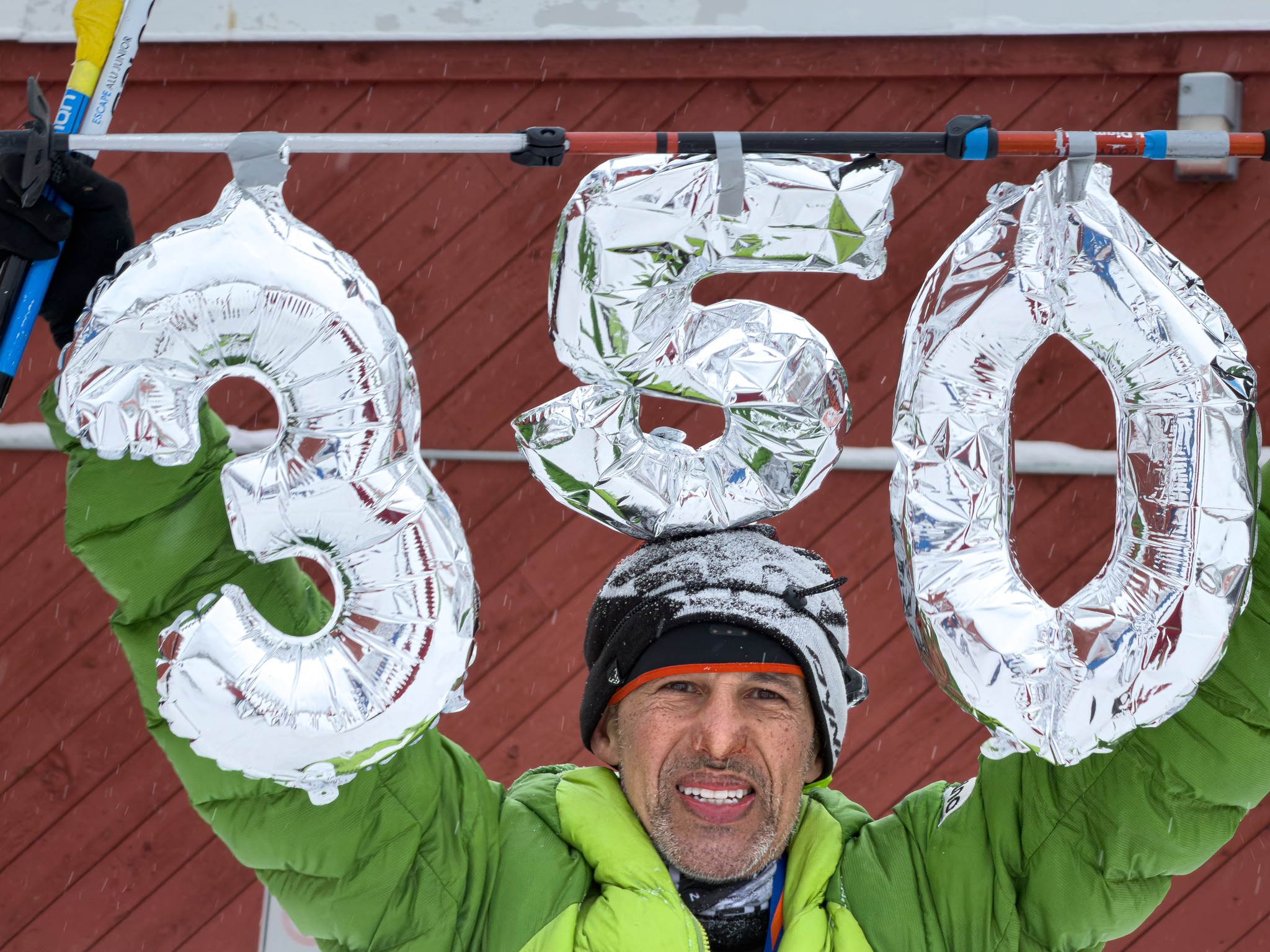
She was welcomed at the finish by scratched athlete 310 Patrick Sumi, balloons in hand and voice fully deployed, helping mark a moment that deserves celebration.

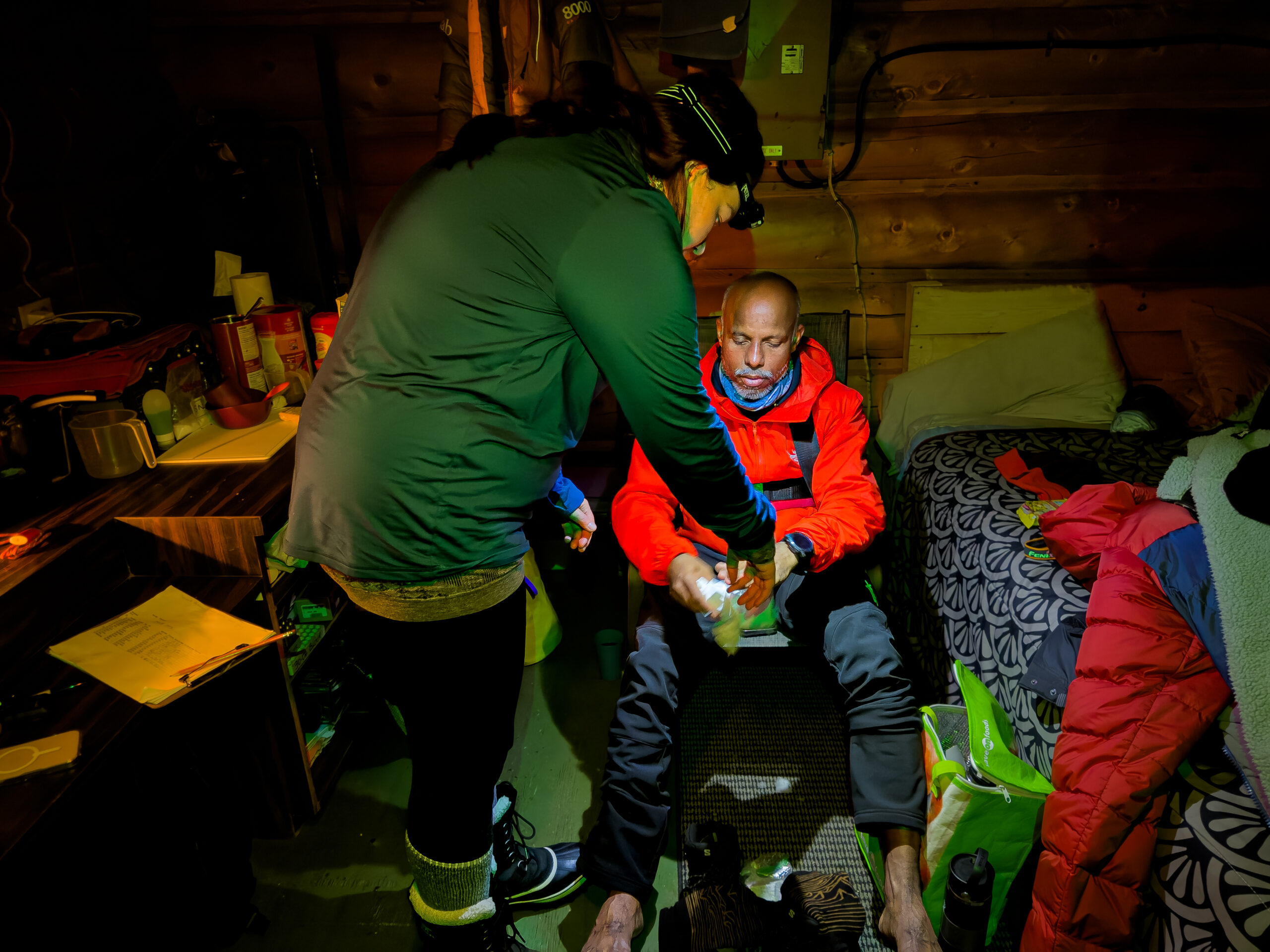
Now, the pulk is down, the boots are off, and Michaela is doing what matters most in the hours after an Arctic finish – resting, recovering, and letting her feet finally dry out.

Congratulations Michaela. A remarkable race, raced beautifully.

Guillaume Grima withdraws in Ross River

Text and photography Callum Jolliffe

After an extraordinary few years at the Yukon Arctic Ultra, 605 Guillaume Grima has made the difficult decision to withdraw from this year’s 645km race.

Guillaume first came to the YAU in 2023 for the 100-mile race, finishing 5th. He returned in 2025 for the 600km, placing second after a closely fought race with Matthieu Blanchard – a rivalry and respect that left a lasting mark on the trail. This year, Guillaume returned once more and dominated the race from the very beginning, holding the lead deep into the course.

After reaching Ross River with discomfort, Guillaume took time to reflect and, following discussions with Race Director Robert Pollhammer, and his family, chose to step away from the race. It was not an easy decision, but it was a sensible one – prioritising long-term health and the ability to return again.

We thank Guillaume for his courage, energy, and relentless determination. His presence shaped this race, and his journey this year deserves great respect.

The race now continues, with 611 Paul Clement and 604 Maxime Bachelot pressing on toward the finish.

Alexander Hoerniss (GER) – first finisher 350km

Text and photography Callum Jolliffe

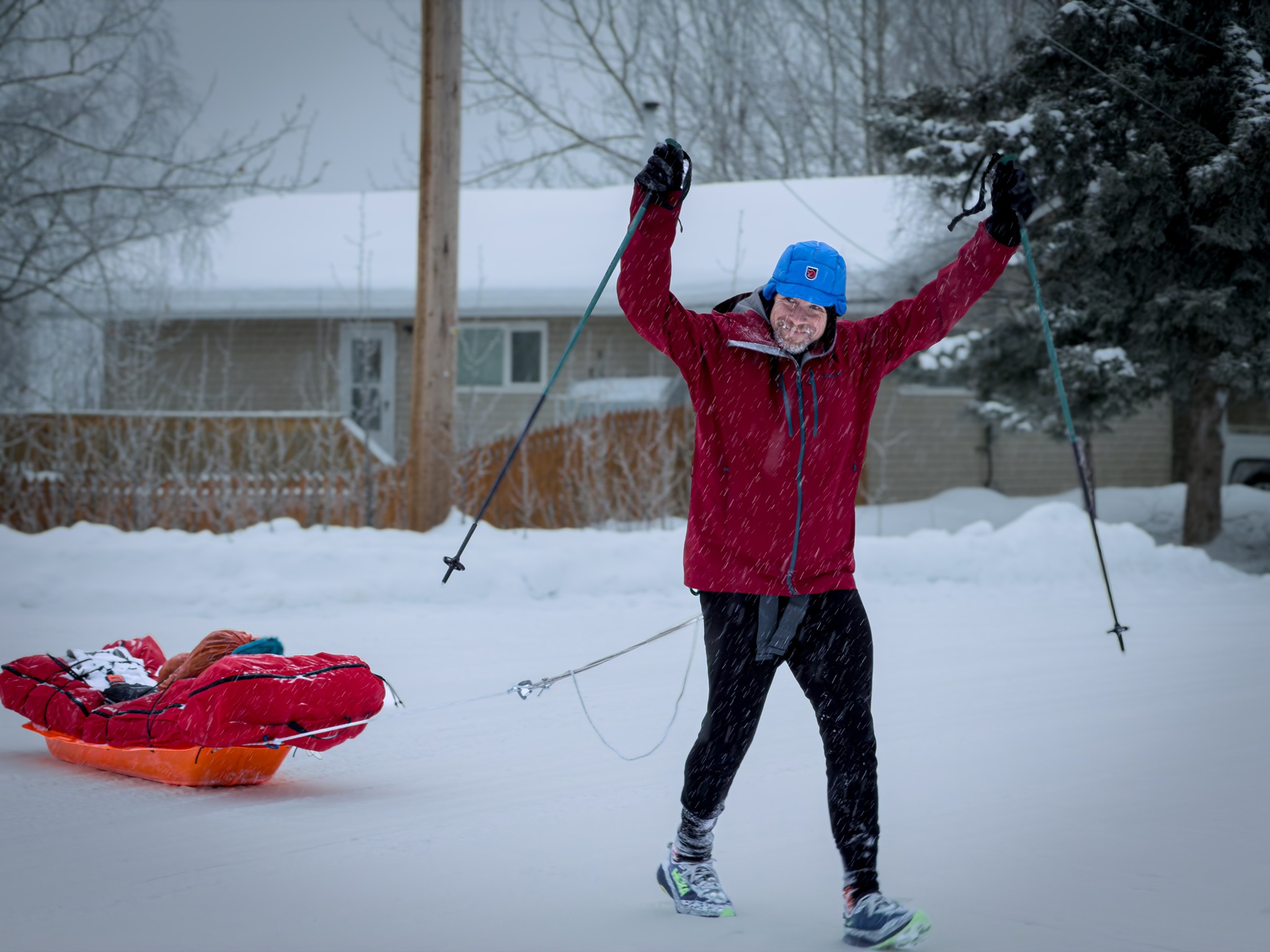
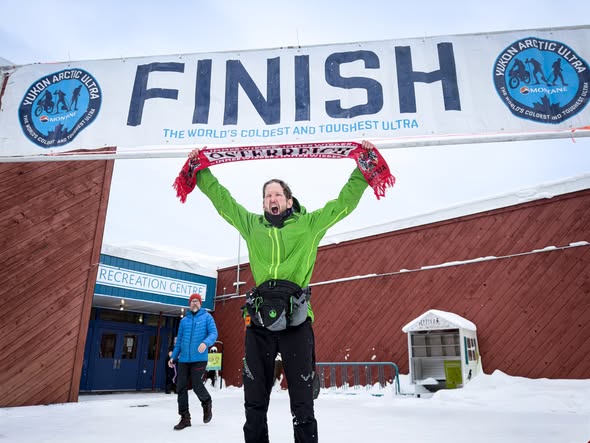
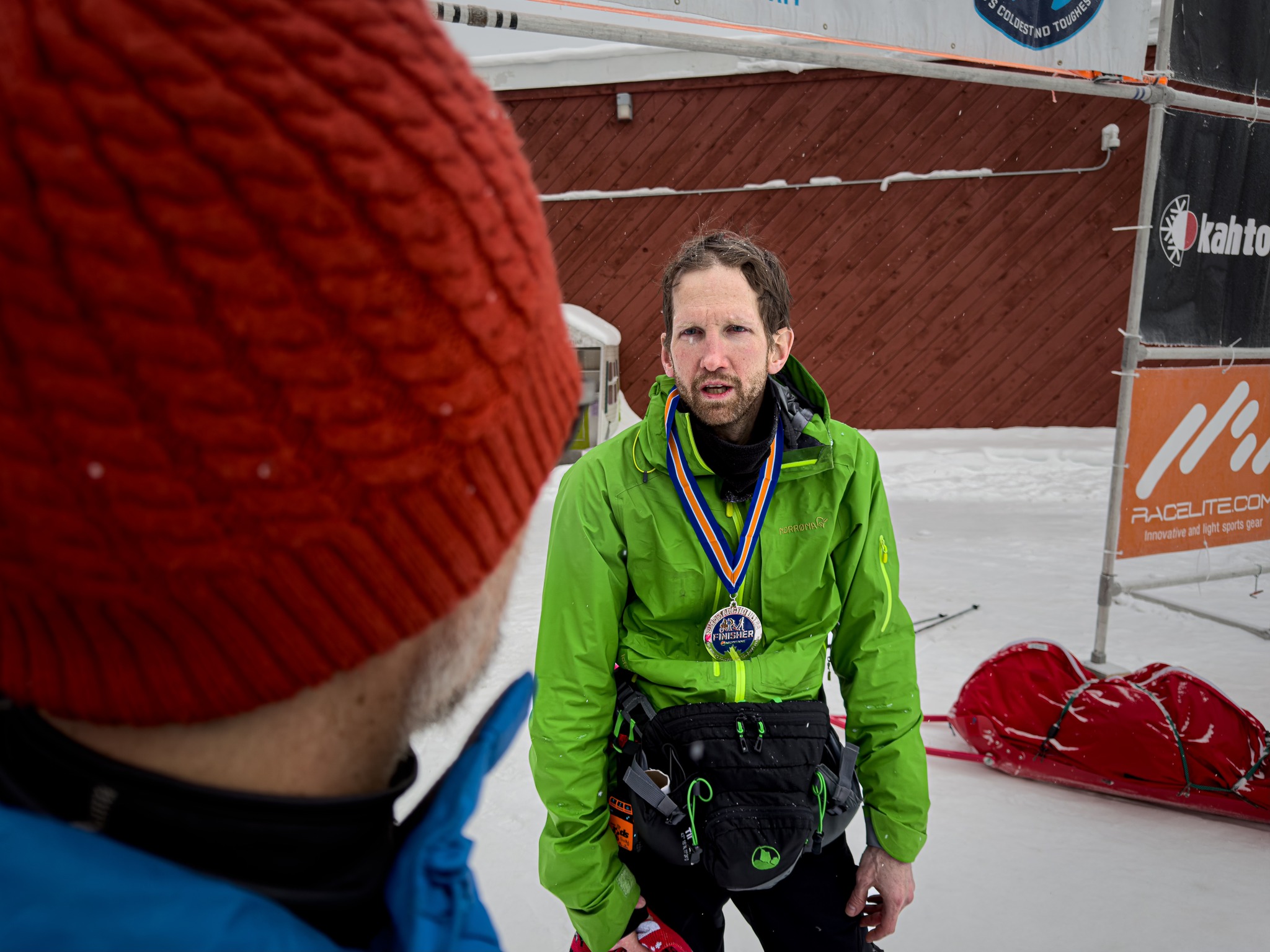
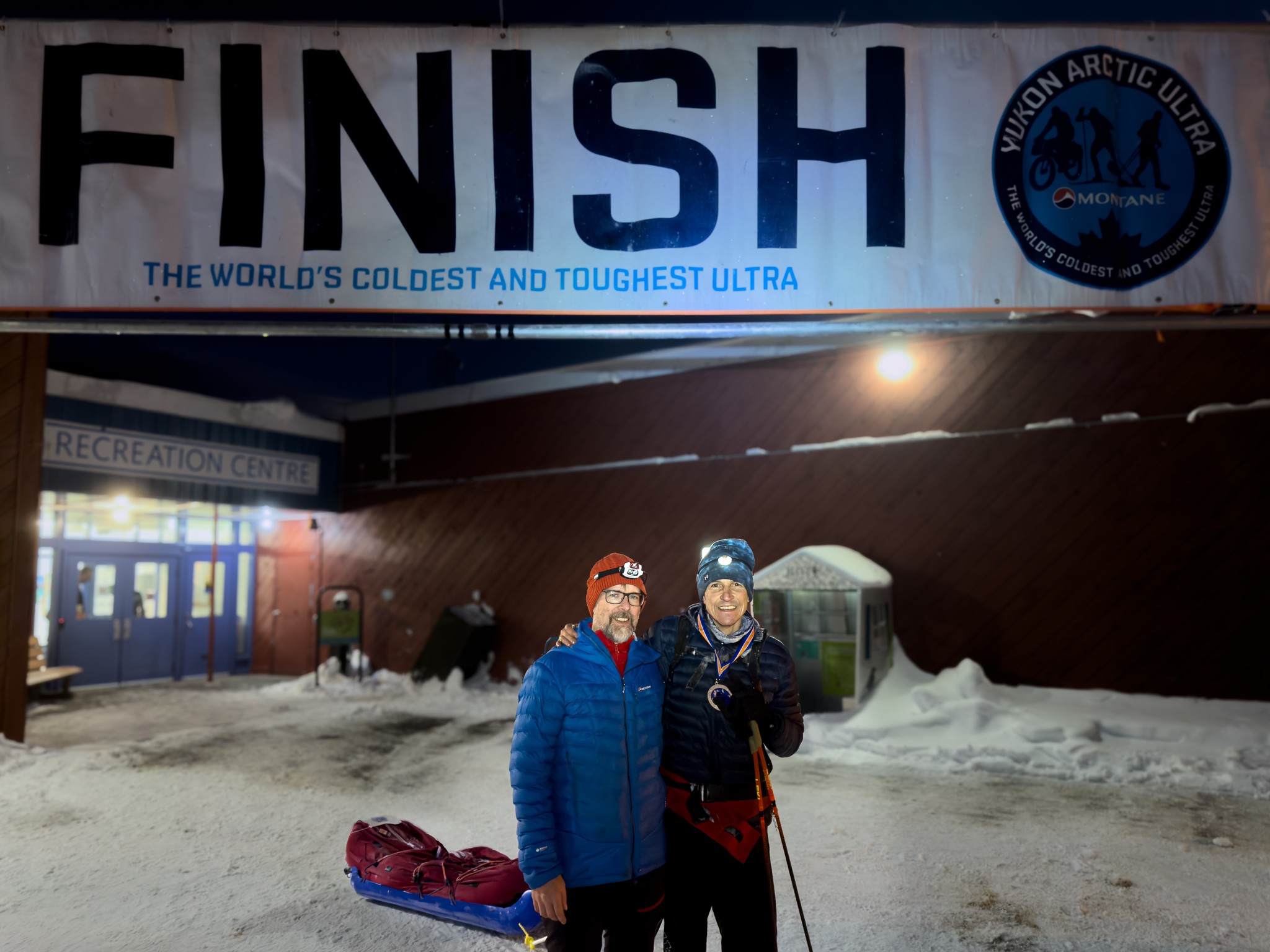
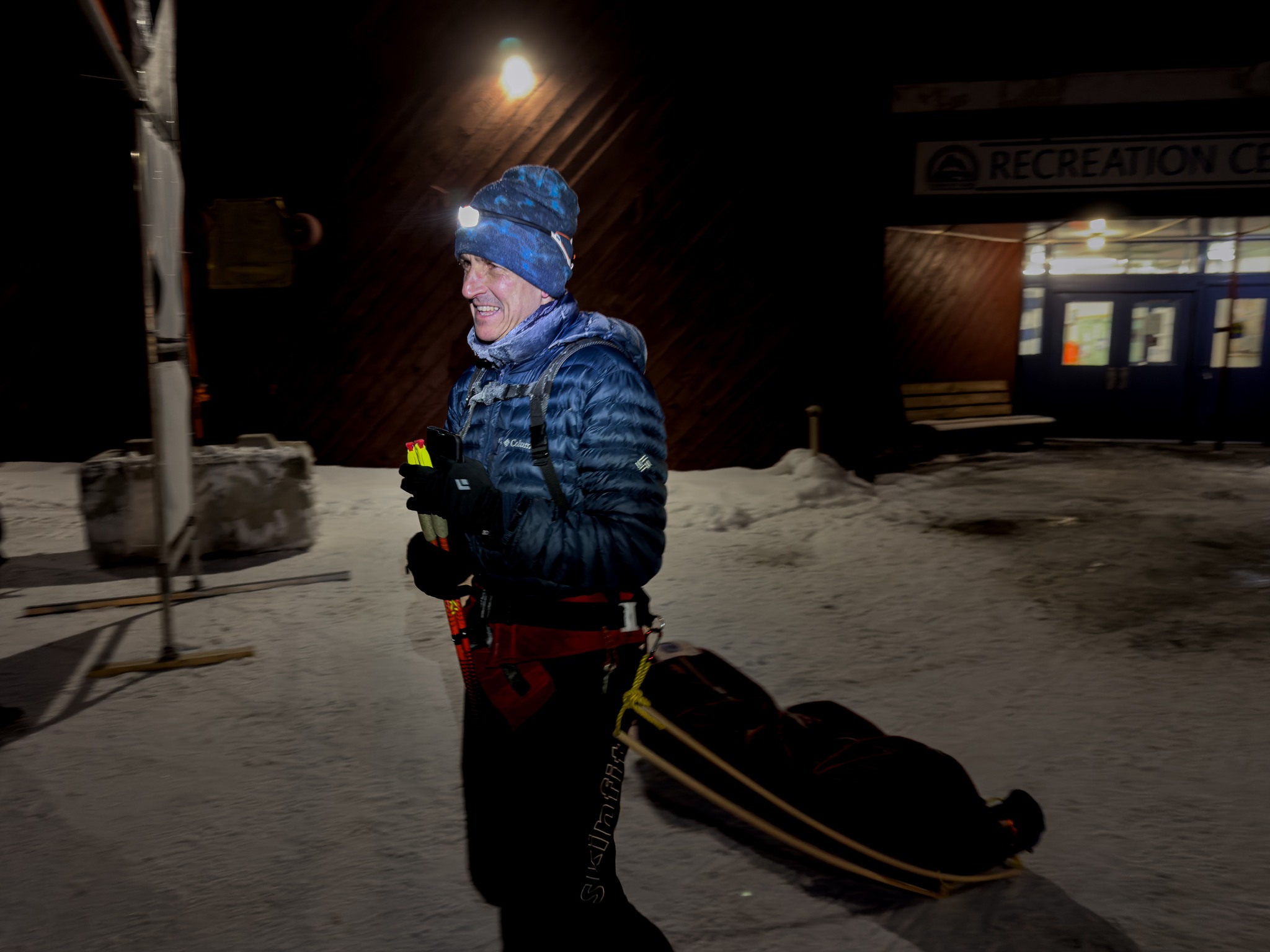
At 19:14 on Feb. 6th, 316 Alexander Hoerniss (GER) arrived into Faro – and didn’t just arrive, he ran it in.

After 350km of winter trail, long nights, heavy decisions, and everything the Yukon chooses to throw back at those who enter it, Alexander crossed the line with strength still in his legs and clarity still in his eyes. A rare sight, and a testament to discipline, judgment, and resilience applied day after day.

Welcomed at the finish by Race Director Robert Pollhammer, Alexander took his medal with a smile, then headed inside – food waiting, warmth returning, and finally the chance to stop moving without consequence.
Now to sit, breathe, and reflect on what’s been done, and what’s been endured.

Finishing an Arctic ultra doesn’t always announce itself loudly. Often it arrives quietly, carrying weight that takes time to fully register. Tonight, Alexander has earned that space.

Congratulations, Alexander – a superb race, run with intent from start to finish.

Olivier Vriesendorp (NLD) wins inaugural 235km race

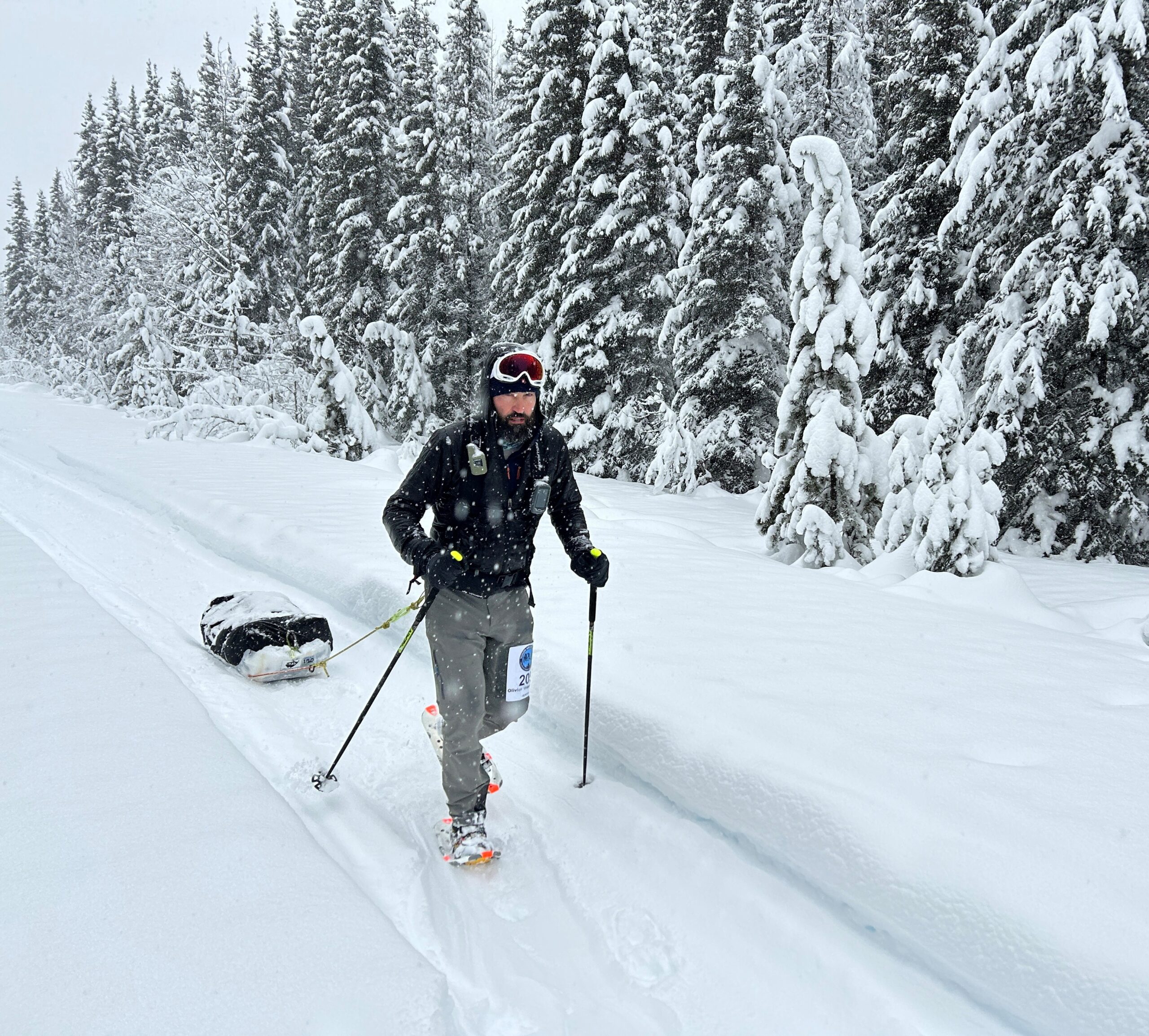
Olivier Vriesendorp finished his 235 km race in Ross River today (Feb. 5th) at 19:20. He is our only finisher in this new distance. With all the elevation and the really tough conditions, it probably was very useful for him to already have reached the 7 Summits! Not to mention the many other (Arctic) adventures that he has undertaken already.
Congratulations Olivier!

A challenging beginning

Copyright: markkellyphoto.com

The Yukon Arctic Ultra 2026 started as planned on February 1st in Teslin. We had a slight delay but it was great to finally see everyone on their way.

Copyright: markkellyphoto.com

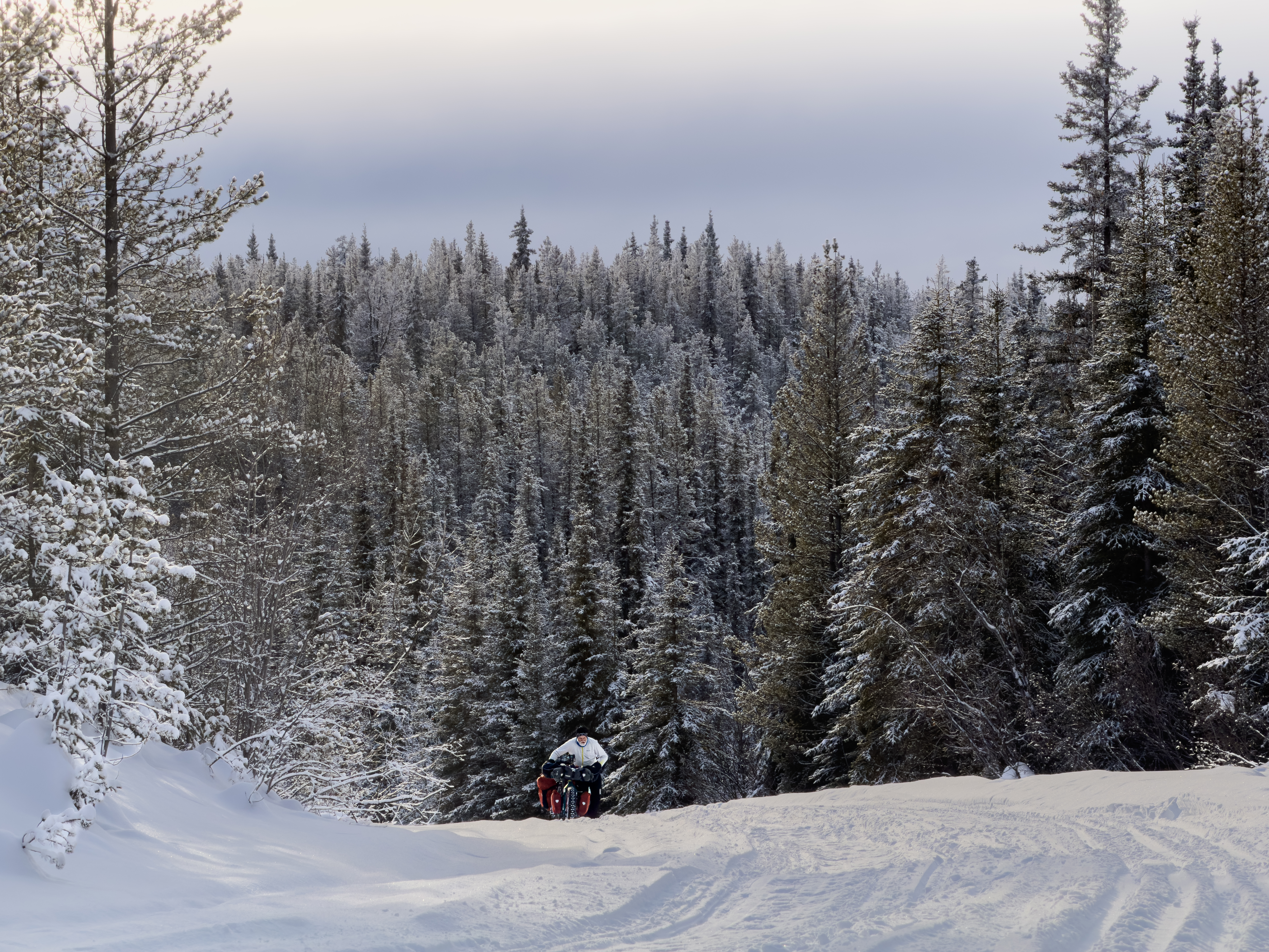
We knew it would be a tough beginning because of recent snowfalls and the very warm temperatures. For the athletes it’s of course one thing to hear about a soft trail and then actually experiencing it. Athletes on foot had to use snowshoes pretty much all the time and our fatbikers – often the faster of our three categories – suffered. Unfortunately, no skiers this year. They would have coped well with the conditions this year!

Copyright: markkellyphoto.com

In the meantime, the athletes in our new 235km race also started their race but they “skipped” Teslin Lake and started right from the beginning of the South Canol Road.

All athletes in the 350 and 645km distances reached Brooks Brook, our first checkpoint. It was a long day and night with many arrivals after midnight and one participant, Jeff Bond, arriving at 08:00am on Feb. 2nd, after taking a longer rest on Teslin Lake.

Not all did continue. Stefan Zahlten (645km/Foot/Germany) and Patrick Sumi (345km/Foot/Switzerland) decided not to continue. For Stefan who is a very seasoned winter ultra athlete and YAU veteran it just was not his year and Patrick felt sick and out of energy.

Copyright: Callum Jolliffe

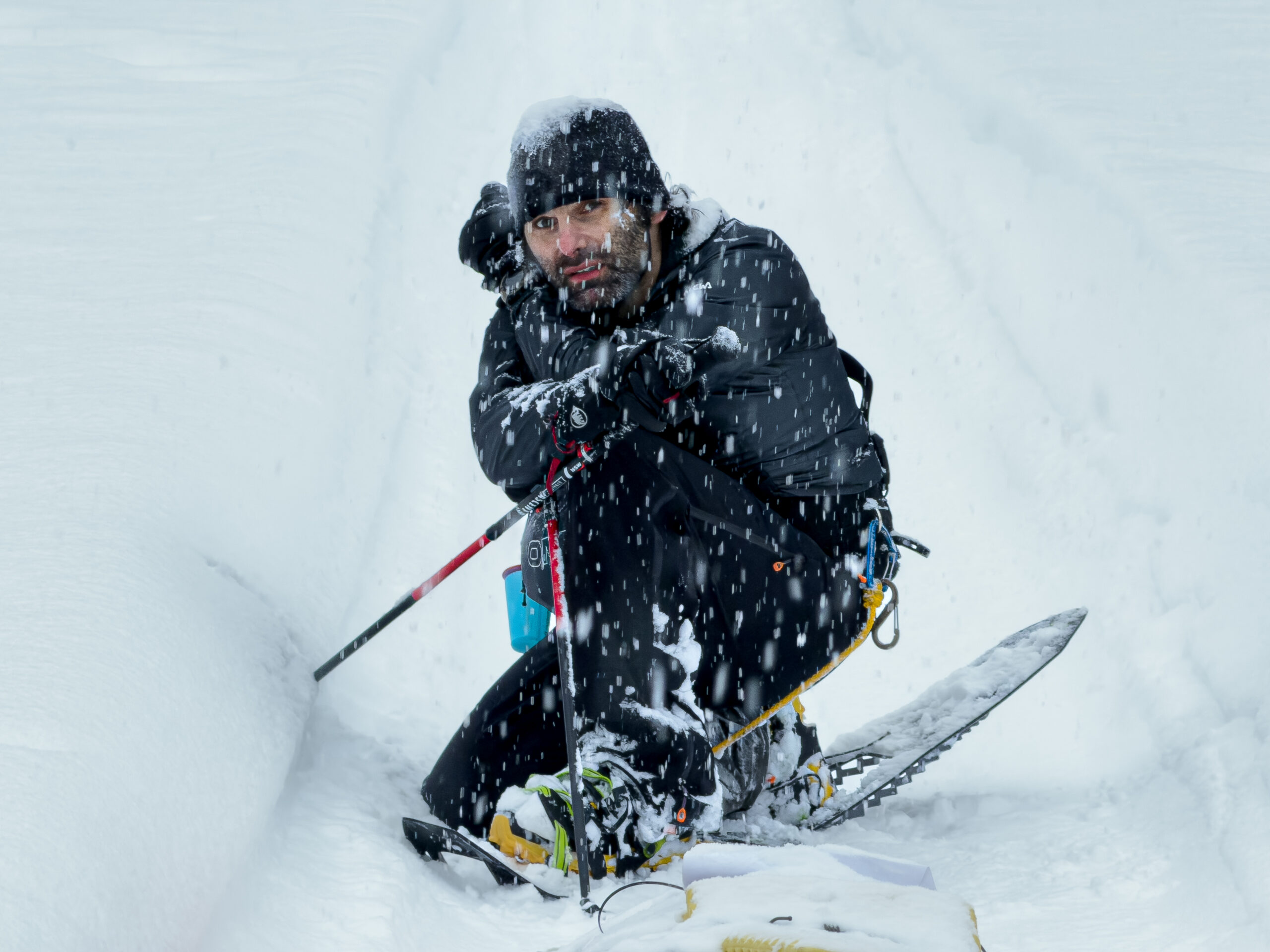
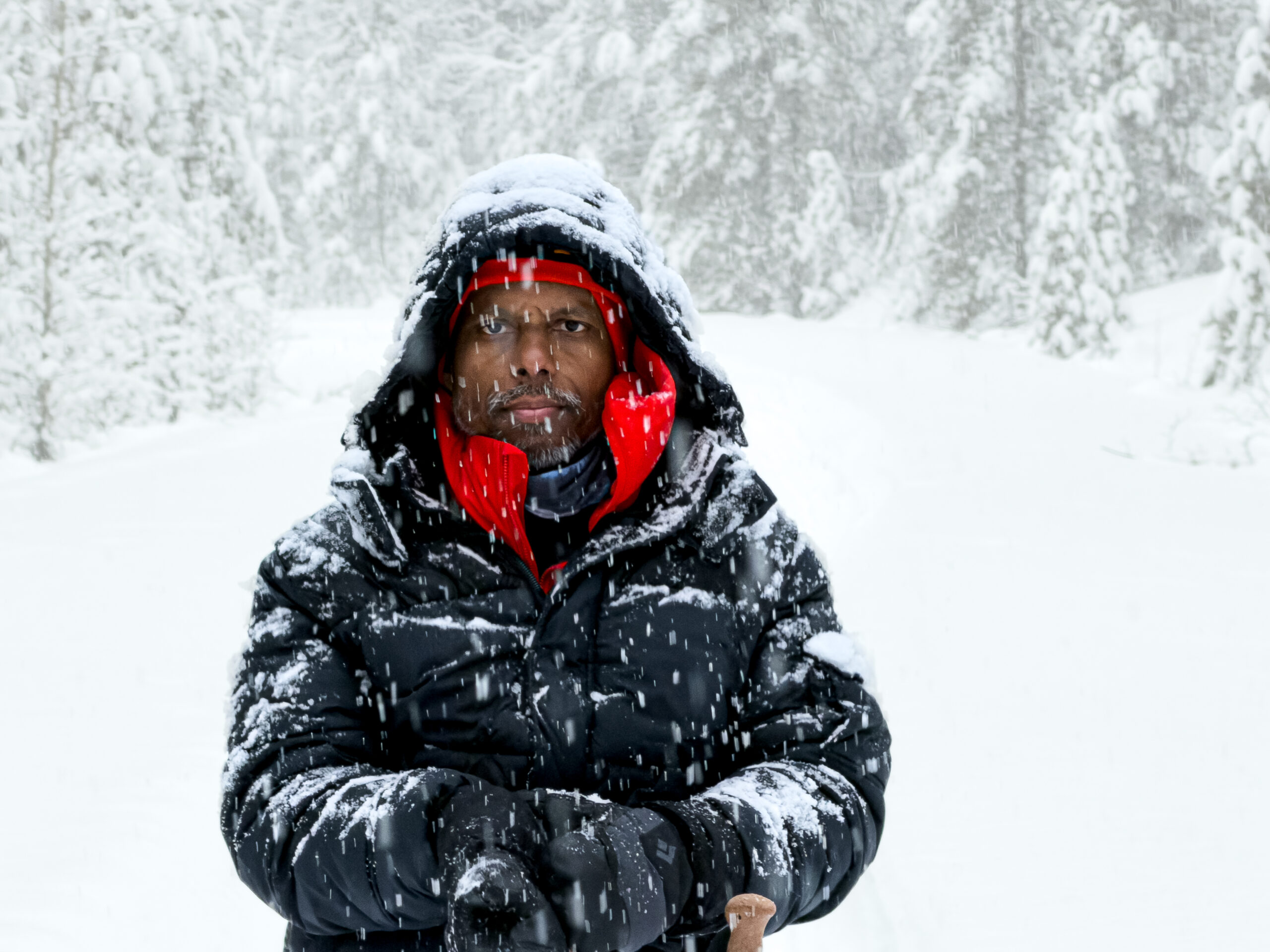
On the South Canol Road, things became even more challenging. While the trails have been slightly firmer, temperatures of around – 5° to 0° Celsius meant that the trails still stayed soft. On top of that, we got fresh snow. AND elevation …

Birgit Langmann, an experienced fatbiker from Alaska, decided to turn around and scratch shortly after heading out. Everyone else gave it a go.

Copyright: Callum Jolliffe

Alsmost all remaining athletes made it to our next checkpoint, Evelyn Creek. But, again, not all continued from here on. Just Jeff Bond (345km/Foot/Canada), a finisher of our former 100mile race to Braeburn, asked to be picked up from the trail and came back to Brooks Brook. He was just not making the progress he needed to.

Thierry Corbarieu (645km/Foot/France) who is a winner of our 430mile race to Dawson City and generally unstoppable, had stomach problems and withdrew. Maximimo Martin Escribano (350km/Foot/Spain), also race veteran, hurt his knee. Seasoned ultra athlete Mark Caldwell (345km/Foot/Scotland). Sébastien Mosconi (645km/Foot/France) had a similar problem to Thierry. Stomach problems and consequently no energy. So, he had to quit. Brian Bell (235km/Foot/Ireland) knew it may get difficult because he had hurt his back. Which is why he had changed from the 345 to the 235km pre-race. But it did not work out and his back went from bad to worse. For Teri Polesky (235km/Foot/Canada), Dave Colley (235km/Foot/Canada), Alex de Sain (235km/Foot/Netherlands) and Vincent Turgeon (235km/Foot/Canada) – all with experience in the Yukon Arctic Ultra – had to scratch in Evelyn Creek.

Copyright: Callum Jolliffe

In the meantime, I crews at Quiet Lake and Lapie Lake were digging their way through tons of snow and getting reading for the first athletes. In the lead we have seen a tight race between Guillaume Grima (645km/Foot/France) and Paul Clement (645km/Foot/France). Maxime Bachelot (645km/Foot/France), currently taking 3rd place also looks very strong.

In the 345km distance, German Alexander Hoerniss has done really well and is hoping to finish 1st. He was held at Ross River longer than he wanted due to a very wet sleeping bag but still has got quite a big distance between himself and the next 345km athlete which is Michaela Senft from Switzerland.

But I am getting ahead of myself. On the way to Ross River and beyond, more snowfall caused some frustration. It’s not just that it made the trails tough. It was also very wet. At one point there was even some light rainfall … And when it’s wet – even tough it’s warm – it can be challenging not to get cold. So, it requires a lot of layer management on the trail and kit management at checkpoints.

Copyright: Callum Jolliffe

So far, all remaining athletes have stayed in the race. The only exception is Ashutosh Prakash (645km/Foot) from India who twisted an ankle last night and had to be brought to our Lapie Lake checkpoint. Up until then Ashutosh had done well. Maybe a bit on the slow side but his focus was safety – as it should be – and it was great to see him getting more and more comfortable with the conditions. With the gained experience from this year, maybe he will give it another go in the future.

Copyright: Callum Jolliffe

In general, all athletes now are finding their rhythm. I have seen Jan Rohrberg (645km/Foot/Germany) and Yasmin Stoderegger (645km/Foot/Austria) in Ross River. Magdalena Paschke (645km/Foot/Germany) also is here now, currently sleeping. All are doing a great job. I also salute our only remaining fatbiker, Thomas Miller, from Edmonton/Canada. He takes it as it is, pushing his bike when there is no other way and enjoying the downhills as they come up.

A good number of 345km athletes are on their way to Ross River. Daniel Benhammou (Foot/USA), Gerald Zechner (Foot/Switzerland), Victor Hugo Barros do Carmo (Foot/Switzerland), Gary Marvin (Foot/England), Alexander Davydov (Foot/Germany), Matt Smith (Foot/Canada) and Hervé Acosta (Foot/Switzerland) are all going strong.
Yukon Expedition Sleds (Y.E.S.) supports YAU

Copyright: markkellyphoto.com

When you’re deep in the Yukon winter wilderness – far from any road and facing extreme temperatures – you need equipment you can depend on. That applies not only to our athletes, but also to our trail crew and those out there breaking and grooming trails long before race day. Yukon Expedition Sleds makes exactly that kind of gear.

Ryan MacGillivray founded the company in Whitehorse in 2014. What began as a hobby, as he says himself, “quickly turned into an obsession”. His goal was to build the most dependable UHMW sleds on the market. While the material itself wasn’t new and UHMW sleds had existed for some time, Ryan saw clear potential for improvement. After 10 years of hard work and more than 15,000 hours of research and development, his products have earned recognition from winter outdoor enthusiasts around the world.

Yukon Expedition Sled skimmers aren’t cheap, but they’re built to last. They feature the best possible hitch system, excellent storage solutions, and now even an optional cover. Ryan offers different sizes and feature sets, depending on what the sled is needed for.

He also builds what he calls “Man Powered Pulks,” which are ideal for races like the YAU. A unique feature of these pulks is the central runner on the bottom, which helps them track much better, even on side hills.

Ryan has got information about all of the above and more on his website. You can order any Y.E.S. product online: yukonsleds.com – check it out!

I’ll be using the YES Responder skimmer while breaking trail, along with the Bigfoot Trail Groomer, and I’ll report back soon on how it goes.

Thank you, Ryan, for the support.

Joaquin Candel receives Shelley Gellatly Spirit of the Yukon Award 2025

Copyright: markkellyphoto.com

I am very happy to announce that Joaquin Candel receives the Shelley Gellatly Spirit of the Yukon Award 2025.

I know Shelley would 100% agree with Joaquin getting this award that carries her name and stands for the “Spirit of the Yukon.” Joaquin deserves it in more than one way. If we had a “Hall of Fame,” he would have earned his place last winter by completing our maximum-distance race in all three possible disciplines: foot, fatbike, and ski. He reached Dawson City on foot and on skis, and in 2025 he finished on fatbike in Faro. That alone is remarkable, but it is not the main reason for this award. What truly matters is how he did it.

As a pilot, Joaquin carries a great deal of responsibility and stress in his everyday life. He comes to the Yukon to recharge his batteries. No matter how cold or how difficult the conditions are, you can see that he truly enjoys being out there. When meeting crew members on the trail and at checkpoints, Joaquin has always been kind, respectful, and fun. He lifts the spirits of everyone around him, and it has been wonderful to witness how a positive attitude can carry someone all the way to the finish – even when the going gets tough. I am pretty sure it is safe to say that Joaquin did not enjoy skiing 430 miles to Dawson City. But it was his goal, he committed to it, and he maintained his focus and positivity right through to the end.

For all of us at the Yukon Arctic Ultra, it has been a great pleasure to get to know Joaquin and to follow his journey. Congratulations, Joaquin! Keep up the great work, keep having fun challenging yourself, and keep inspiring those fortunate enough to share an adventure with you. We all hope to welcome you back to the Yukon many more times.

News from the Yukon Quest

Copyright: markkellyphoto.com

If you follow the Yukon Arctic Ultra (YAU) and are interested in extreme winter challenges, you likely also hear some news about the Yukon Quest every now and then. The YAU obviously has had a strong connection with the Yukon Quest from the very beginning. That’s one of the reasons why, last winter, we decided to leave the traditional Whitehorse-to-Dawson route together with the Quest. Since then, there have been some changes within the Yukon Quest organization and it has long been unclear to people on the outside what will happen with this legendary mushing race in the upcoming winter. A few days ago, the organizers made a first statement. Basically, the Yukon Quest plans a return to the “old” trail to put on a 100-mile race from Whitehorse to Braeburn. The release on facebook also states:

… The Yukon Quest’s goal is to return to the City of Dawson, and that will take time, money, organization, consultations and a lot of effort. As the trails are developed and maintained back to Dawson, (and they may well follow new routes) the Quest Organization will stage races on those trails until we can run safely and securely all the way to Dawson.”

What does all this mean for the YAU 2026?

In short, it won’t change anything. I had to commit to the new route a long time ago. Not knowing what the Quest would do, I worked on the assumption that it may not take place. I am super happy that there will be a Yukon Quest 2026, and the incredible journey of this famous sled dog race will continue.

As planned, the YAU 2026 will start in Teslin, go on the South Canol Road and via the Dena Cho Trail we continue from Ross River to Faro. The 600 km athletes head to the North Canol Road for an out-and-back before they also finish in Faro. The new 235 km distance will start in Brooks Brook in the afternoon (exact time tbc.) on February 1st and finish in Ross River.

Regarding the marathon, we had hoped to get access to a facility that is at the right distance but unfortunately it looks like we won’t be able to use it. So, at this point all I can say is that we likely won’t have a marathon distance again. Should anything change, I will update asap.

What can we expect beyond 2026?

For those of you interested in the YAU 2027 or beyond, it’s too early to confirm anything. There are good reasons to stay on the new trails – way less issues with overflow being one of them – and there are of course good reasons for looking into a return to the old Quest trail. I will spend a lot more time than normal in the Yukon this winter and can hopefully have many interesting conversations to find out what the best solution is from 2027 onwards. Any locals who would like to contribute with input – regarding the existing options, the idea of connecting Faro with Pelly Crossing, any ideas on new trails, please feel free to reach out by email to info@thegreatoutdoors.de.

2026 training course details confirmed

Copyright: markkellyphoto.com

The details for the YAU 2026 training course have now been confirmed by course organiser Jessie Gladish. As always, the course takes place just before the race. That way, any athletes who have to or want to participate in the course, can do the YAU right afterwards – all in one trip.

The training course is also open to anyone wanting to do the YAU another year or for people who want to do other races or no race at all. You will find all information on the training course page.

Yukon Arctic Ultra 2026 starts February 1st

Copyright: markkellyphoto.com

This year we changed with the Yukon Quest from the “old” trail to a new one. The start was in Teslin. We will stay on this new trail in 2026, i.e. our base before the race will be in Whitehorse but then we will have a transfer to Teslin on our start date, February 1st. The distances we will offer are 235, 350 and 600 km.

Yukon Arctic Ultra 2025 start line in Teslin – Photography: Mark Kelly

At this point, it’s uncertain whether a trail from Faro to Pelly Crossing will be available. For now, we are planning to repeat the 600 km race format from 2025. This means starting in Teslin, heading to Ross River, and completing a 120 km out-and-back on the Canol North Road before finishing in Faro. The race cut-off remains at 12 days. If a trail from Faro to Pelly Crossing becomes possible, we will remove the out-and-back section and continue directly from Faro to Pelly Crossing instead. The total distance should remain roughly the same.

The Canol Road, beautiful but challenging – Photography: Mark Kelly

The 350 km race remains unchanged but will now have an additional day, extending the cut-off to 7 days.

We’re also introducing a new 235 km distance, ideal for those looking for a shorter race. The start will be either in Brooks Brook or Johnson’s Crossing. If the race begins in Johnson’s Crossing, the total distance will be closer to 220 km. We will confirm the exact details as soon as possible. The timing of the 235 km race will depend on the location of the first checkpoint and available facilities. It will either start alongside the other distances or early the following morning. The cut-off time will be 5 days.

We are still uncertain about the return of the marathon distance. This will depend on the first checkpoint’s location and whether we can secure a morning start – our preferred option. The final decision will also be influenced by the start date of the Yukon Quest.

Looking ahead to 2026, we cannot predict the weather conditions. During our premier of the new trail in 2025, temperatures dropped to –40°C almost every night. Combined with the significant elevation changes on the Canol Roads and later the Dena Cho Trail, the race proved to be incredibly challenging. Only 6 out of 46 athletes reached the finish line. A lot of athletes suffered from frostbite injuries. If we encounter similar temperatures again, the difficulty level will be just as extreme.

Some images that give you an idea about how hard our new trail is – Photography: Mark Kelly

So, everybody should be warned! Most of the remote checkpoints do not allow for sleeping inside and it’s very difficult to dry equipment there. Constant self-monitoring, layer management, hydrating and eating well, taking the right amount of rest and keeping the sleeping system as dry as possible are key. Hitting the sweet spot with the weight of your gear is key – i.e. obviously have all you need to be safe but avoiding anything that is not necessary.

Always important: Stopping and dealing with problems as the occur – Photography: Mark Kelly

The paperwork to sign up for the Yukon Arctic Ultra 2026 should be ready next week. If you want to sign up, please have a look at our Application page re. entry fees and deadlines. When you are ready to commit, please send an email to info@thegreatoutdoors.de.

If you are new to winter ultras, I would like to remind everyone, that we have our Bright Equipment Lapland Arctic Ultra in Sweden with distance of 85, 185 and 500 km. Whilst one winter we also had – 35° C in this race, overall temperatures are less extreme there, which means it’s a really good way of getting used to this kind of races.

Our legendary Laxforsberget checkpoint at the Bright Equipment Lapland Arctic Ultra – Photography: Swedish Lapland